Renowned for his signature Blue Horse series, the Chinese contemporary artist Ma Dongmin works in a painterly language that draws together the expressive, the conceptual and the surreal. His work has shown at the Venice Biennale, and at the 61st edition in 2026 it earned a Special Mention award. Now, in his first collaboration with Leica, he presents a solo exhibition in Singapore, Fire Horse — The Decisive Moment. MU/SE sat down with the artist to talk about photography and painting, art-making in the age of AI, and the expression of Eastern culture within an international context.以标志性《蓝马》系列闻名的中国当代艺术家马东民(Ma Dongmin),绘画语言融合表现性、观念性与超现实主义风格,作品曾于威尼斯双年展展出,并于2026年第61届威尼斯双年展中获得特别提名奖。此次,他首次与徕卡(Leica)合作,在新加坡呈现个展《火马——决定性瞬间》。《MU/SE》与艺术家展开采访,谈及摄影与绘画、AI 时代的艺术创作,以及东方文化在国际语境中的表达。
MU/SE: This is your first collaboration with Leica. What drew you to the project?MU/SE:这是您第一次与徕卡合作,是什么吸引了您参与这次项目?
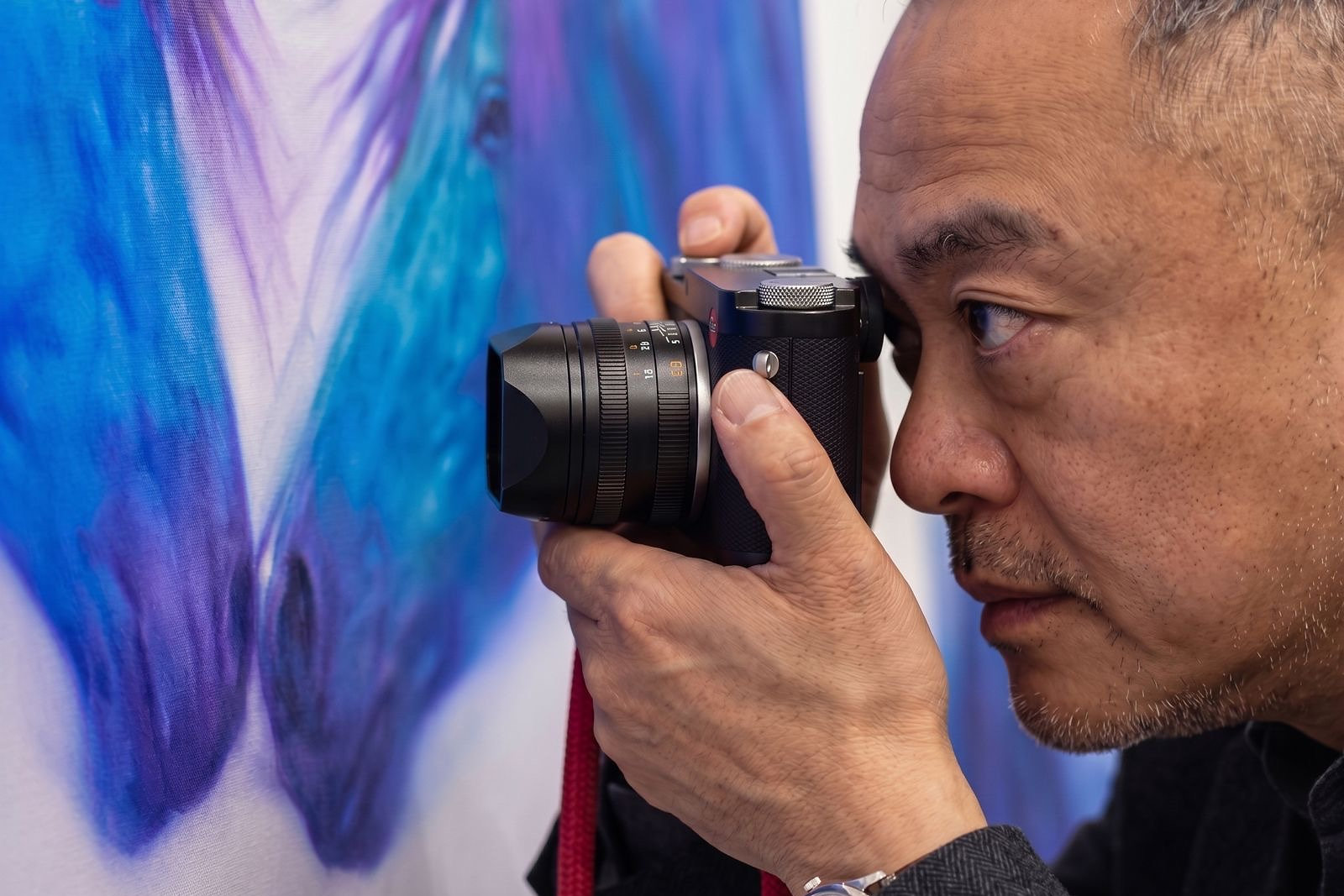
Leica has always stood for the finest cameras in the world, and it has given rise to so many extraordinary photographs. One of them is The Kiss of the Century, taken in the very instant that victory in the Second World War was being celebrated. I had once painted that image, and when Leica came across the work, they took an interest in what I do. Looking into it further, they discovered that I, too, regularly use a Leica in my daily life to capture all manner of things, which I then translate into works of art. There has always been an ongoing affinity between me and Leica — and so, for the first time, I have come to mount an exhibition with them.徕卡一直是世界顶尖级相机的代表,也诞生过许多特别优秀的摄影作品。其中有一张《世纪之吻》,是庆祝二战胜利那一瞬间捕捉到的照片。我曾经绘画过《世纪之吻》这部作品,莱卡正好看到这部作品后,对我的创作产生了兴趣。进一步了解后发现,我在日常中也经常使用徕卡相机去捕捉许多事物,再将这些影像转化为艺术作品。我与徕卡之间一直有种不断的情缘,因此首次来到徕卡举办展览。
MU/SE: What does being selected for the Venice Biennale mean to you?MU/SE:入选威尼斯双年展对您而言意味着什么?
For me, having my work selected for the Venice Biennale is a deeply meaningful affirmation. As everyone knows, the Biennale is the foremost art exhibition in the world — the equivalent of the Olympics in sport. To win an award on such a platform means recognition from art critics the world over, and that is a source of great encouragement to me.对我来说,作品能入选威尼斯双年展是一项非常重要的肯定。众所周知,威尼斯双年展是世界顶级的艺术展览,相当于体育界的奥运会。能够在这样的平台获奖,意味着来自世界各地的艺术评论家的认可,这对我而言也是一种鼓励。
MU/SE: In an age of rapidly advancing AI and digital imaging, what role do you think painting has to play?MU/SE:在AI与数码影像快速发展的今天,您认为绘画扮演着什么角色?
I don't believe the arrival of AI has had any real impact on painting. At its core, AI is a vast database, and most of what it generates is drawn from work that already exists. Artists, by contrast, are forever moving forward, forever innovating; by the time an artist has struck out in a new direction, AI typically has no relevant data yet from which to learn. So its effect on art is slight — precisely because artists never stop innovating.我认为AI的出现并没有对绘画造成影响。因为AI本质上是一个庞大的数据库,它生成的内容大多来自已经存在的作品。而艺术家是不断向前走、不断创新的,当艺术家已经走向新方向时,AI往往还没有相关的数据可供学习。所以它对艺术的影响并不大,因为艺术家在不断的创新。
MU/SE: What do you think is the greatest misconception people hold about a successful artist?MU/SE:您认为大家对于一个成功艺术家最大的误解是什么?
The greatest misconception, I think, is the belief that a fine work of art ought to be understood and acclaimed at once. In reality, many artists run ahead of their time and of public understanding, and what they express cannot always be fully embraced in the present moment. Van Gogh is a textbook example. He produced a vast body of work in his lifetime, yet it drew little attention and was seldom collected; only many years later did people gradually come to grasp its artistic worth. Art tends to develop with a forward-looking eye, while the public's understanding of it takes time to catch up. What an artist does, therefore, is not always seen in its own moment — but that does not mean it is without meaning.我认为,大家对于艺术家最大的误解,是认为优秀的作品应该立刻被理解和认可。但事实上,很多艺术家往往走在时代和大众认知的前面,他们所表达的内容未必能够在当下被完全接受。梵高就是一个典型的例子。他生前创作了大量作品,却鲜少得到关注和收藏。直到多年以后人们才逐渐理解他的艺术价值。艺术的发展往往具有前瞻性,而大众对艺术的理解则需要时间。因此,艺术家所做的事情并不总能在当下被看见,但这并不意味着它没有意义。
MU/SE: As a Chinese artist active on the international stage, do you feel you carry a responsibility to represent Chinese culture?MU/SE:作为一名活跃于国际舞台的中国艺术家,您会觉得自己肩负着代表中国文化的责任吗?
That sense of responsibility is part of it, but not the whole. As a Chinese artist, when you stand on the international stage, people will naturally read into your work the elements tied to your cultural background, so there is inevitably some measure of duty to express that culture. Yet as I have gradually found my place within the international art world, I've come to see that geography is not what matters most. Today's art world is already an open and plural context, and the West is by no means unfamiliar with Eastern culture. Rather than simply insisting on 'which culture one represents,' I am more concerned with how to weave Eastern culture into my own practice — letting East and West meet, collide and merge within the work to give rise to new possibilities.这种责任感是其中一部分,但不是全部。作为一名中国艺术家,当你站在国际舞台上时,人们自然会从你的作品中看到与你的文化背景相关的部分,因此多少会带有一种文化表达的责任。但随着我逐渐融入国际艺术舞台后,我发现地域性并不是最重要的。今天的艺术世界已经是一个开放且多元的语境,西方对于东方文化也并不陌生。相比单纯强调“代表什么文化”,我更关注如何将东方文化融入自己的创作之中,并让东方与西方文化在作品中相遇、碰撞、融汇,产生新的可能性。
Tags:Tags: